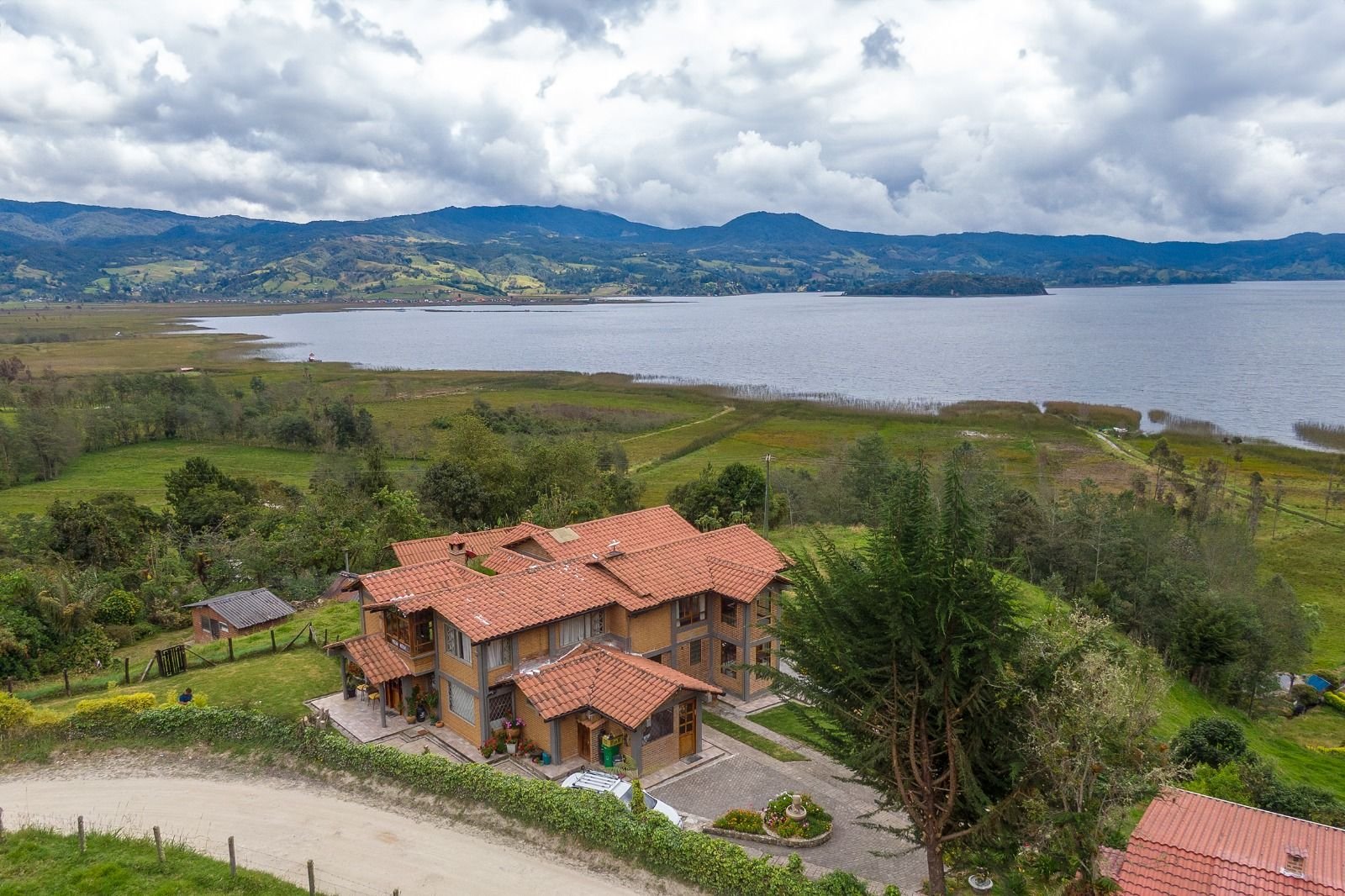
Nariño's magical south
Laguna de la Cocha · El Encano · San Juan de Pasto, Colombia
Casa Campestre La Toscana isn't just a property — it sits at the heart of one of Colombia's most distinctive regions. A sacred lake, a village that feels European, and a city with two UNESCO-recognized heritages all surround this place.
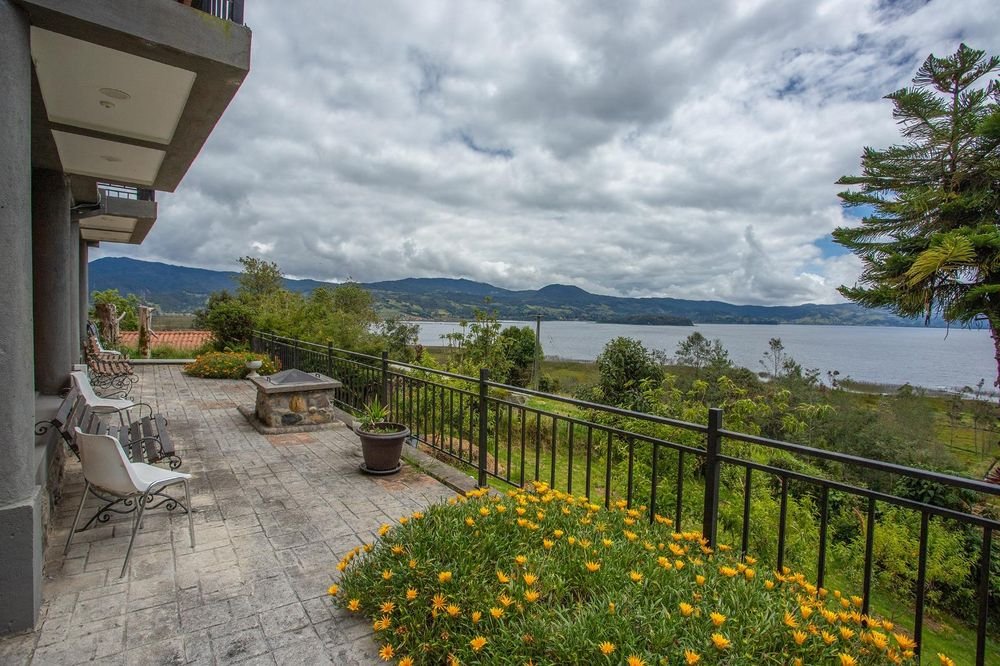
Laguna de la Cocha
"Cocha" means lake in Quechua. It is Colombia's second-largest natural lake, after Laguna de Tota, sitting within the lowest páramo ecosystem in the world. Communities descended from the Indigenous Quillasinga people have lived along its shores since ancient times.
Legend says the lake was born from a betrayal between two lovers: water spilled from a gourd and swallowed seven prosperous cities that still rest beneath its waters today.
La Corota Island
At the center of the lake floats the smallest protected sanctuary in Colombia's national park system — just 12 hectares of moss, ferns and orchids, home to the silvery grebe. It's reached by a roughly 10-minute boat ride from the main dock.
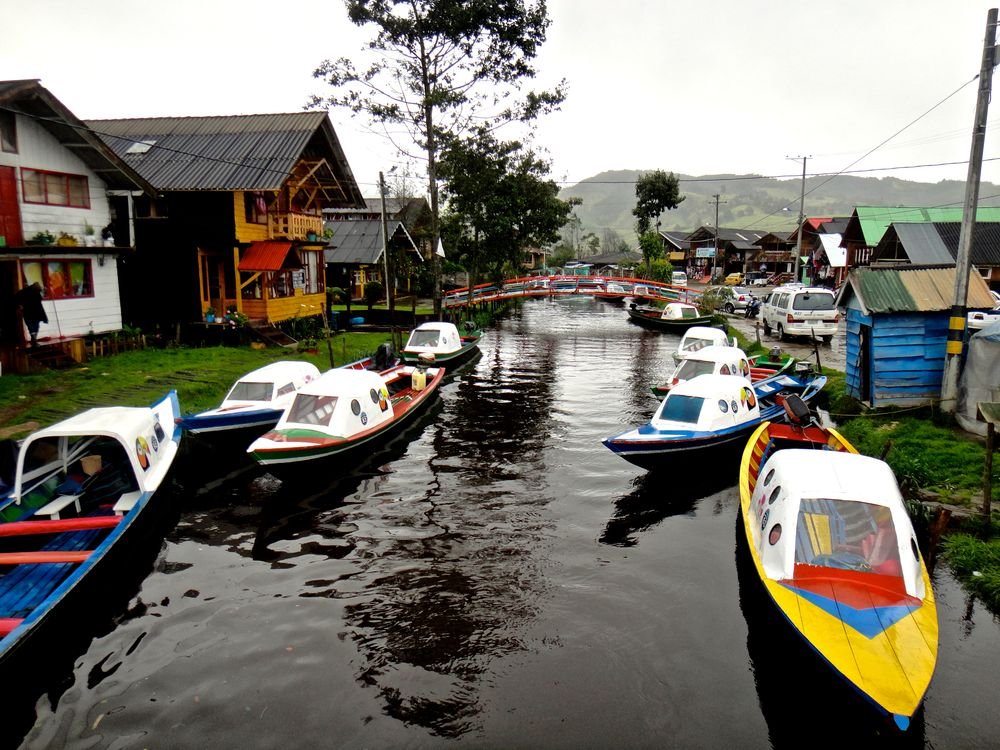 Photo: Gersonparra11, Wikimedia Commons (CC BY-SA 3.0)
El Encano, Colombia's little Switzerland
El Encano is the lakeside township of Pasto, known for its Swiss-chalet-style architecture and colorful pier lined with trout restaurants — the same alpine, country style as La Toscana's main cabin. Many travelers compare it to a European village transplanted into the Andes.
San Juan de Pasto — the "Surprise City"
Founded in 1539 by Lorenzo de Aldana on Quillacinga land, Pasto sits in the fertile Atriz Valley at the foot of Galeras volcano (4,276 m), Colombia's most active. Just 40 minutes from Laguna de la Cocha, the city holds two UNESCO-recognized heritages.
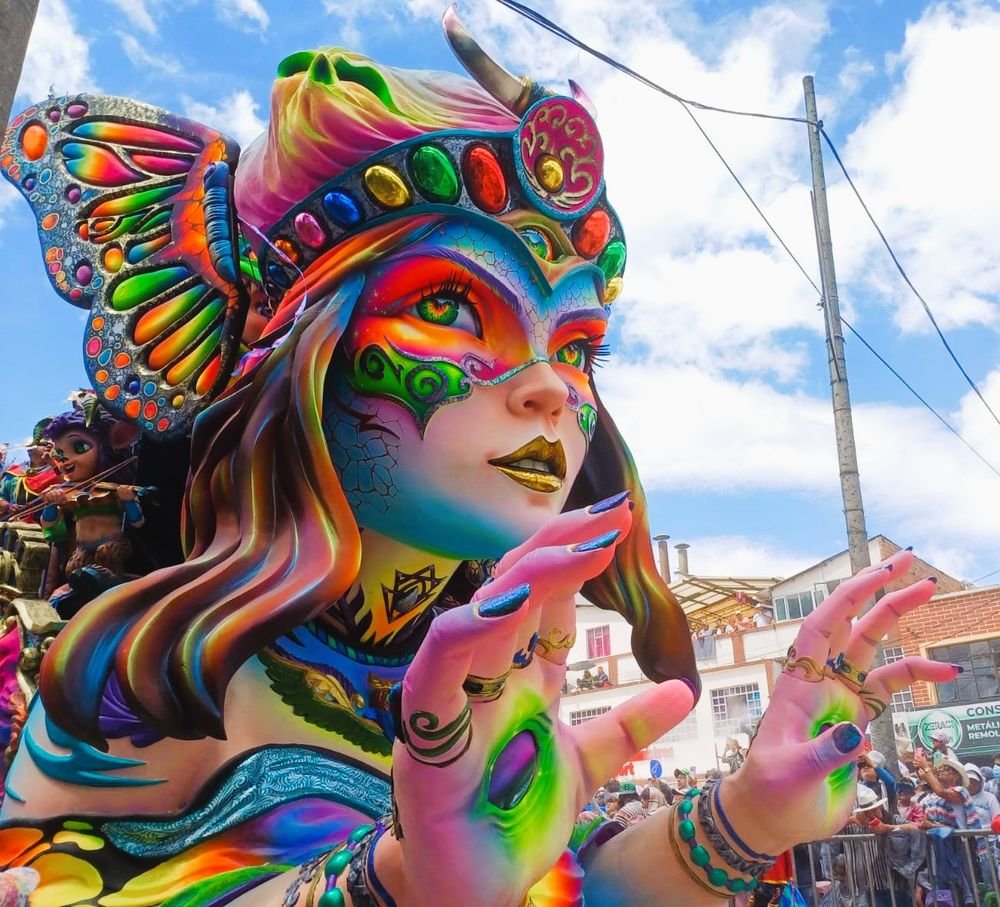 Photo: Carmen Quetama, Wikimedia Commons (CC0)
Carnival of Blacks and Whites
Declared Intangible Cultural Heritage of Humanity by UNESCO in 2009. Every first week of January, Pasto fills with troupes, floats and color: from the Carnavalito and the Castañeda Family parade to the Day of the Blacks, the Day of the Whites and the Grand Parade.
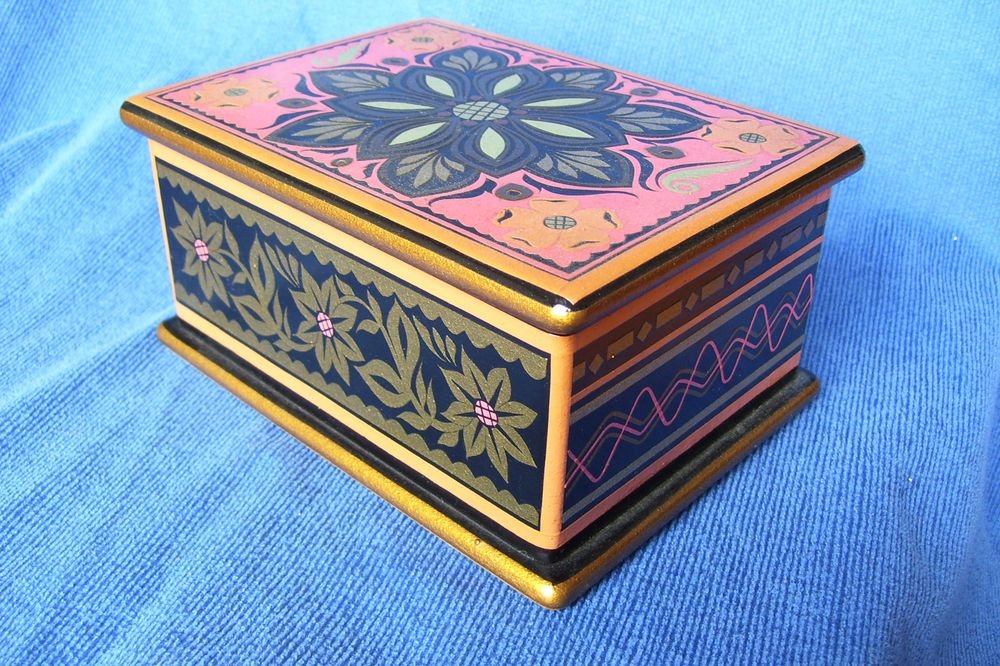 Photo: Wikichasqui, Wikimedia Commons (CC BY-SA 3.0)
Barniz de Pasto (Mopa-Mopa)
A pre-Hispanic artisan technique found nowhere else in the world, recognized by UNESCO in 2020. Resin from the mopa-mopa shrub is turned into thin colored sheets that artisans — many from families with generations in the craft — hand-carve onto wood.
The Quillacinga people called the volcano "Urcunina," meaning Mountain of Fire.
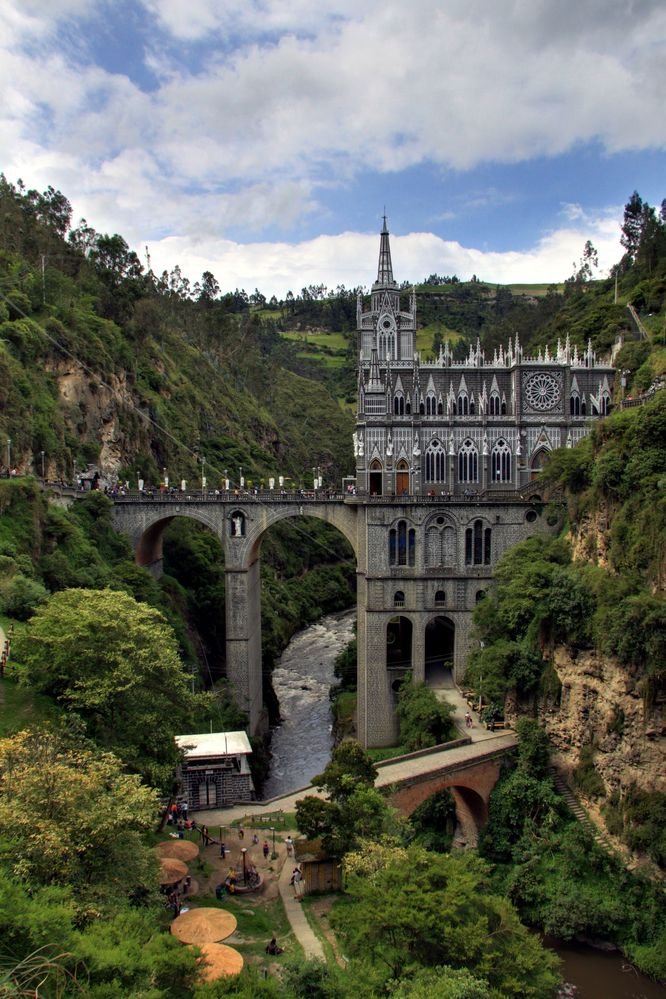 Photo: Martin St-Amant, Wikimedia Commons (CC BY 3.0)
Las Lajas, the church born from the rock
In the canyon of the Guáitara River, near Ipiales, stands the Sanctuary of Our Lady of Las Lajas: a neo-Gothic basilica built between 1916 and 1949 on a bridge spanning the gorge. The UK's The Telegraph named it the world's most beautiful church in 2015, and it draws more than 750,000 pilgrims and travelers every year. Its story begins with a 1754 legend, when a deaf-mute girl spoke for the first time before an apparition on the rock.
≈ 2.5 hrs from the property · a full-day excursionFlavors of the region
The people, the pace, the real reason
Nariño is known for its hospitality: people greet each other on the street, offer you coffee without being asked, and still sit on the sidewalk to talk as the sun goes down. It's a different pace of life — slower, more human — that you feel the moment you leave the city.
Between mountains, páramo and water, this region holds what many people search for and never find: real silence, clean air, clear skies, and a cool, stable páramo climate year-round, between 3 and 15°C.
As a vacation getaway
Nature, food, living culture and a lake at your doorstep — enough to unplug for a week, a month, or as many as you want.
As a retreat
For those looking to slow down for good: a stable climate, a quiet community, and real proximity to nature without full isolation.
Live where others only come to visit
A sacred lake, an alpine village and a World Heritage city — all minutes from your front door.
Back to the propertyCultural background for context, based on public sources and official UNESCO recognitions. Not part of the property's legal documentation.